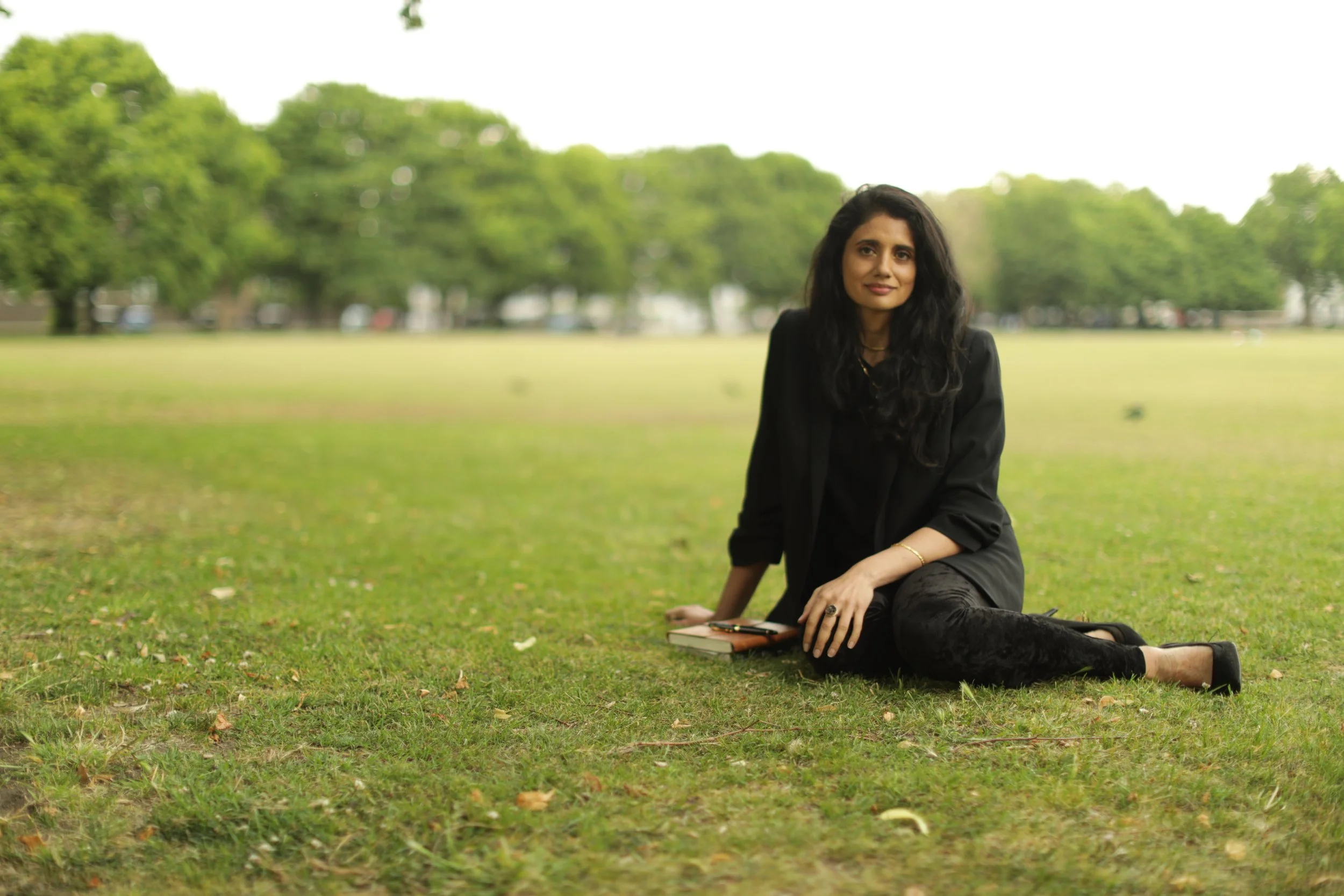
Modern life fragments attention
Slow Living is an experiment in recovering it.
And the five senses are our training ground.
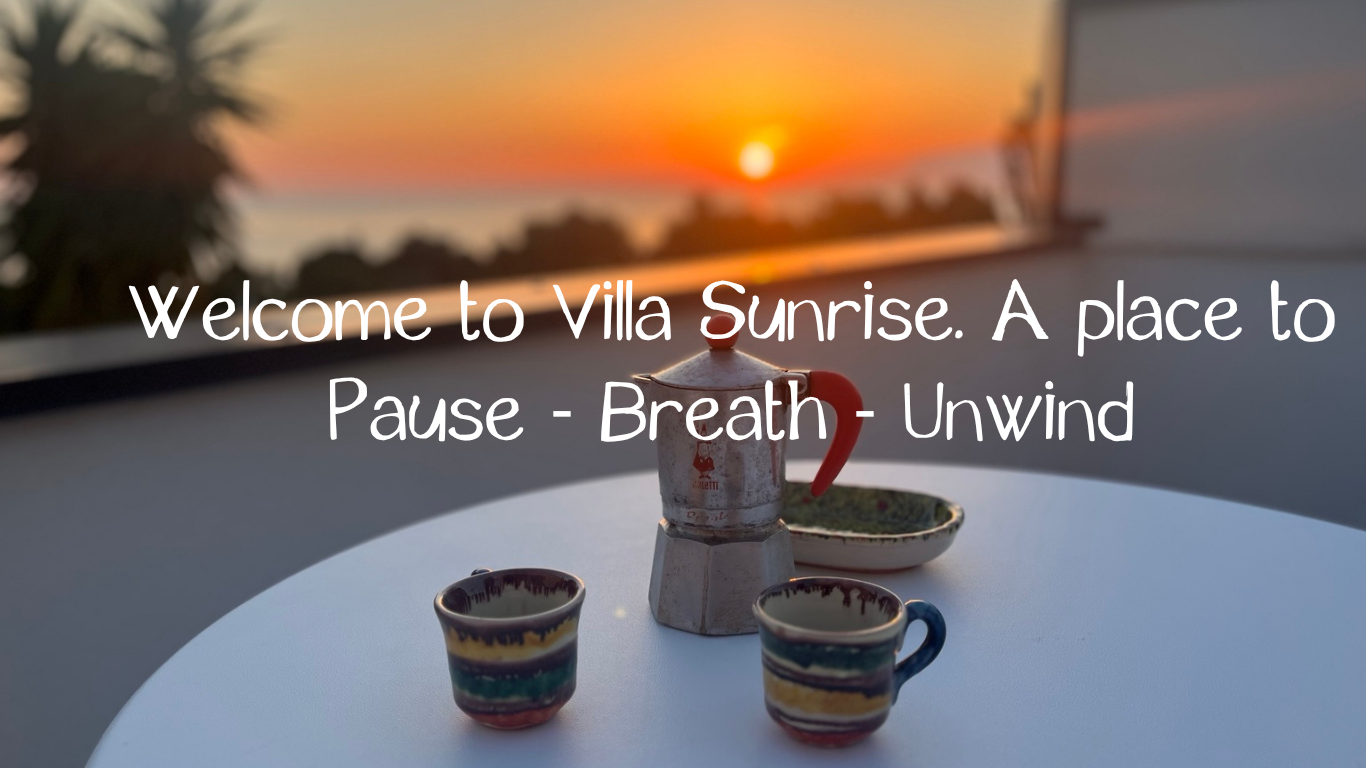
We are bombarded by information. Messages, notifications, screens, deadlines and the constant invitation to switch our attention from one thing to another.
Slow Living begins with a simple question:
What happens when we remove noise and give our attention back to what is actually here?
A breath. A conversation. The sound of the sea. The taste of food. Light moving across the landscape.
The things we often stop noticing when life moves too quickly.
Why the senses?
Our senses are our most immediate connection with the world around us.
Yet much of modern life takes place somewhere else …in thought, on screens, anticipating what comes next.
So rather than simply telling people to slow down, Slow Living gives us something to slow down into.
Sight. Sound. Touch. Smell. Taste.
We practise looking rather than glancing.
Listening rather than merely hearing.
Tasting rather than simply eating.
The senses become a way of bringing attention back into the present and into our bodies.


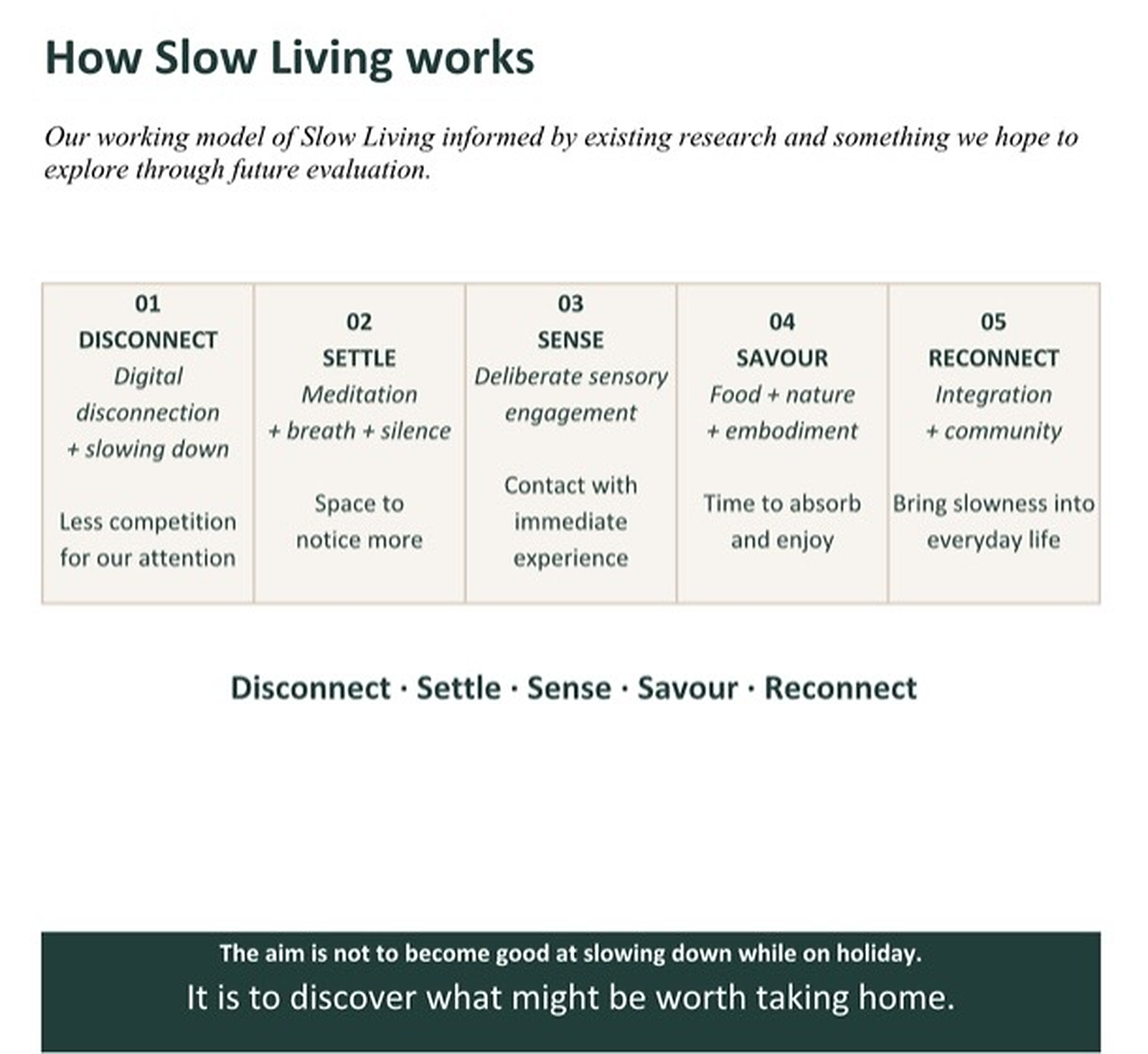
What does the research tell us?
There is a growing body of research exploring many of the ingredients that come together in Slow Living: digital disconnection, mindfulness, attention, nature and wellbeing.
A 2024 qualitative study followed people taking part in a mindfulness-based digital wellbeing retreat. Participants described becoming more aware of their technology habits and developing a more intentional relationship with their devices. Nature and connection with the group were also important parts of their experience.
More recently, a 2026 study of 500 travellers explored digital detox tourism through the lens of attention restoration. It found that digital-detox experiences were associated with greater perceived environmental restorativeness, which in turn related to mindfulness and subsequently to subjective attention restoration and aspects of wellbeing. Importantly, the researchers also acknowledged limitations around separating digital disconnection from the effects of travel and nature themselves.
The question we're interested in
A successful retreat isn't simply one where people feel relaxed after a beautiful week in Sicily.
We're interested in something longer term: Does deliberately slowing down and re-engaging sensory attention change our relationship with attention, technology and everyday experience, and does any of that stay with us when we return home?
From retreat to real life
Slow Living creates an unusual environment: fewer screens, fewer demands, beautiful natural surroundings, contemplative practice and time.
Everyday life isn't like that.
And that's precisely why we're interested in what happens afterwards.
Our ongoing Slow Living gatherings create opportunities to keep practising, not by recreating a retreat, but by finding small ways of paying attention differently within ordinary life.
The retreat ends. The practice does not.
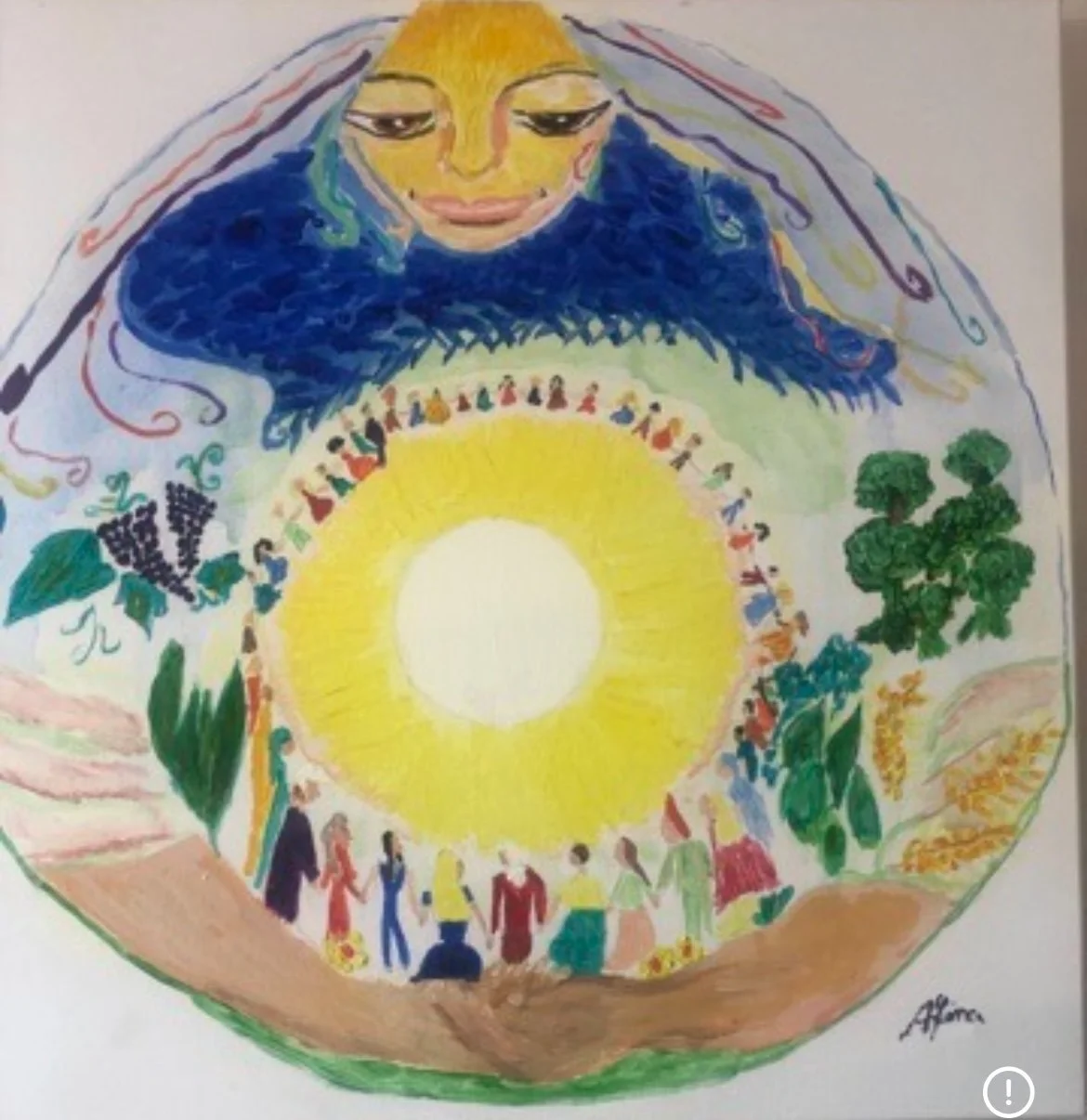

Meet Your Hosts
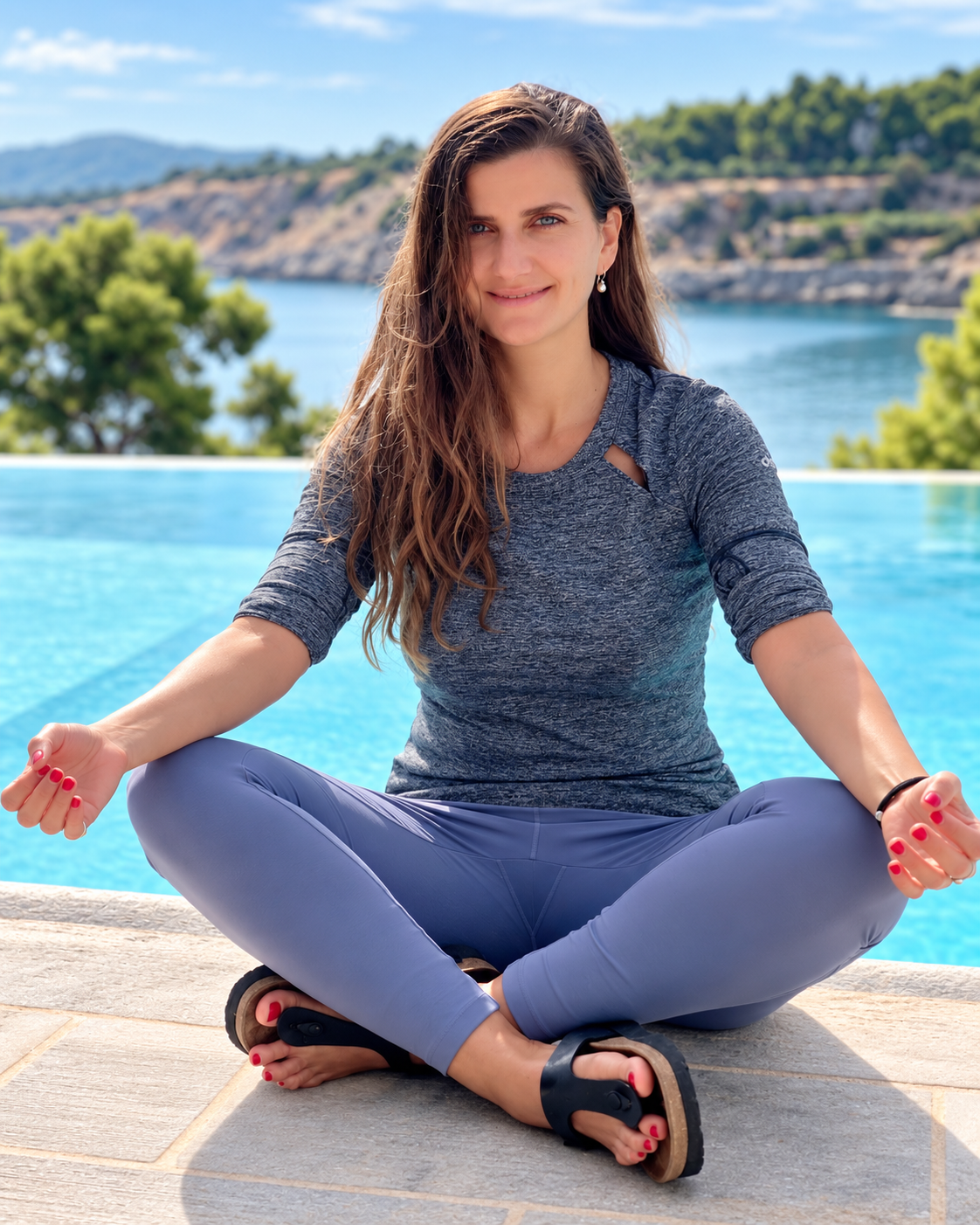
SILVIA IMPELLIZZERI
MINDFULNESS PRACTITIONER | BUSINESS PSYCHOLOGY | CITY PROFESSIONAL | NLP PRACTITIONER
Silvia brings together more than a decade of mindfulness practice with a career in high-performance corporate environments. She holds a postgraduate degree in Industrial, Organisational and Business Psychology from UCL and, alongside her professional career, has led mindfulness and meditation sessions for city professionals across different career stages.
She has also helped build mindfulness communities in professional settings, creating opportunities for people to integrate contemplative practice into demanding working lives.
Her approach draws on both Eastern and Western traditions, including mindfulness, mantra, sunrise meditation and Taoist practices. She is also a qualified NLP Master / New Code Practitioner, Universal Healing Tao practitioner, and practises Nonviolent Communication (NVC).
What she brings: a practical bridge between performance and presence — making slow living grounded, relevant and accessible to modern life.